








Designing graphics and writing essays with the push of a button, the abilities of “generative AI” may seem like modern magic. However, having given it thought and observed its influence on the lives of students, others around the school are apprehensive over the technology. Its current state is messy, characterised by lack of transparency and causing more harm than good.
English teacher John Neisewander is a known advocate for awareness on the root issues with how it is sourced –extreme energy use and unauthorized data scraping. Currently, these concerns are most directed at Google Search’s “AI Mode” and AI overviews that now accompany every search.
“To me it’s environmentally irresponsible. It’s kind of unethical from an intellectual property perspective. And on top of that, I don’t think it saves me that much time when, you know, I feel like I can’t trust the results anyways,” Neisewander said. Amongst the ethical concerns, that final point on the functionality of AI results bears explaining.
Anyone hoping to somehow use AI summaries and prompted answers must understand that Large Language Models –the technology that AI text is built off of– cannot fact-check what statements they put out, only make assumptions based on patterns in existing text on the web collected as data. They are notorious for being shallow and prone to mistakes.
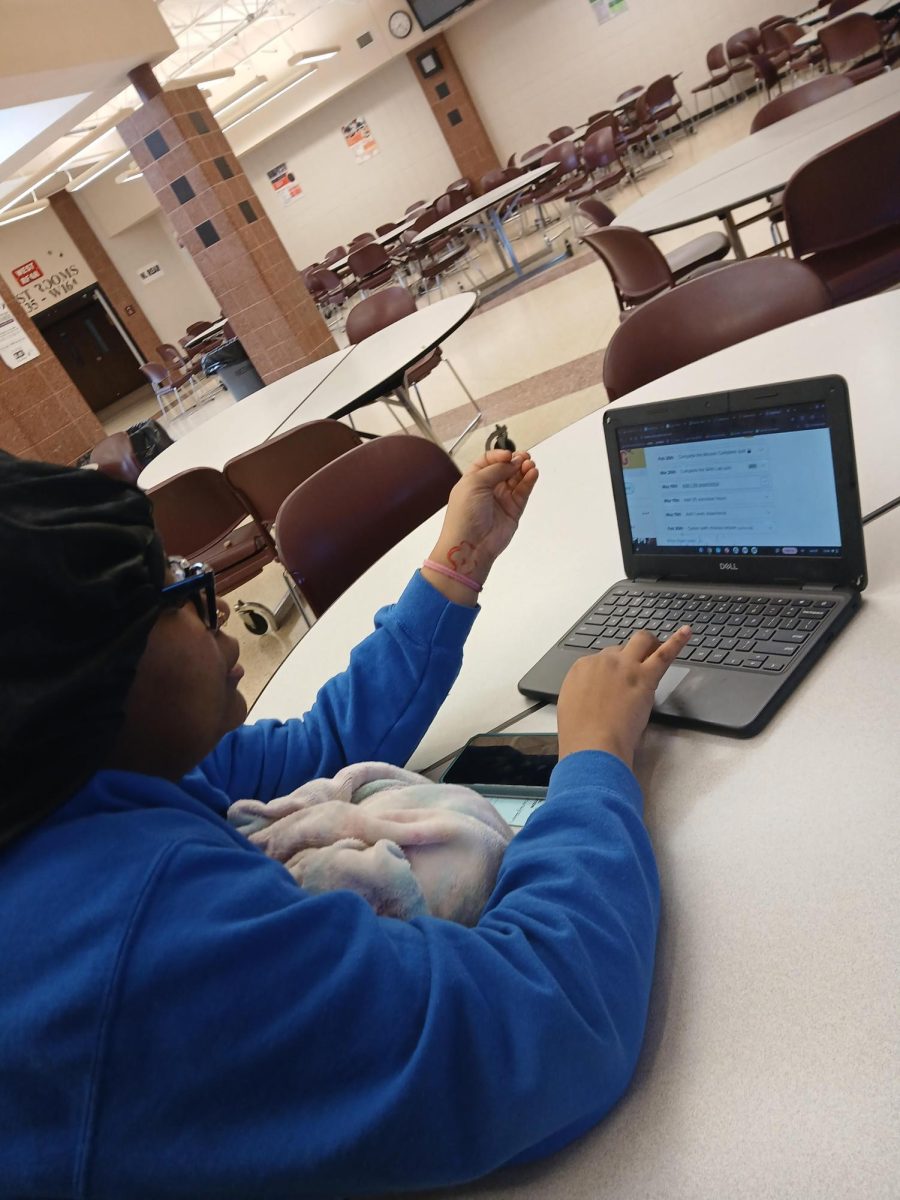
Even so, a large number of students using them in this way will take them at face value without any further research. Senior Morgan Dabson most often observes this at lunch, from students rushing late assignments. “They’ll just throw the questions into ChatGPT and they’ll spit out an answer.” Dabson mentions.
Yet as long as it isn’t a direct admission of cheating, students might not completely conceal their AI use in assignments, proclaiming its usefulness in ideation and such. Neisewander counters this anytime it comes up in his classroom.
“So if you ask the computer to do it, then you’re limiting your ideas to just what it spits out at you, and you’re not pushing yourself and putting yourself through that critical thinking process that’s a really necessary part of learning,” Neisewander said.
In a way, AI-generated work reflects a want from students to reduce the pressure of schoolwork. Students of all levels are prone to it. Yet, it’s an incomplete fix that instead feeds into the general issue, and reinforces bad habits for students who already lack investment or passion for learning.
How can teachers manage this? Art teacher Iga Puchalska is one of a few staff members who has an optimistic outlook on the potential of AI, and wrote about her hopes for its use in the future.
“Instead of proactively teaching with AI and guiding students to use these powerful tools responsibly and effectively to deepen their understanding, we are unintentionally enabling misuse by avoiding the conversation altogether.” Puchalska said. It is, in fact, a topic that is largely ignored. Even AI cheating is hardly addressed formally beyond general advisories against it on writing assignments.
The main obstacle is that the genAI sphere as a whole has proven too fast-paced and unstable to form district policies on. We as a society are still trying to navigate and define the massive potential and problems in genAI. Companies that push forward in spite of this leave its faults to worsen.
“And ideally, AI systems shouldn’t train on other AI-generated content. Otherwise, we risk creating an echo chamber where inaccuracies, bias, and low-quality material compound over time,” Puchalska said. The current practice of indiscriminate “web-scraping” data collection that ChatGPT and other genAI models are trained from is already starting to create this effect.
Yet, with AI being woven into browsers themselves, it’s easier than ever to choose convenience over certainty and take the first result thrown at you without surveying other sources, let alone fact-checking.
“For now though, I think it’s going to keep increasing. As information gets put to the side, AI is just going to keep growing as people try and figure out things. Because if information isn’t readily available then people are going to keep searching it, keep getting AI answers,” Dabson said.
Trying to take this flawed technology, moderate its use by students, and work its inconsistent results into standardized curriculums is not feasible in the current industry climate. It would only slow classes down as teachers expend time dealing with the complications it would make.
“For me a huge pet peeve is learning with the teacher, instead of the teacher teaching. If the teacher doesn’t know the material as well then I feel very uncomfortable, and especially if they have to use, like, ChatGPT to make stuff, then I start questioning what they’re doing,” Dabson said.
There is that, and then there is the overall alienation that would come from AI-based class structure. “…But still, if I’m going to listen to you present information to me, I want it to be something that you put together. Or at least was put together by some human being and not, you know, just a robot,” Neisewander said.
AI is pushed constantly in recent times, but when tackling generative AI, it is important to remain mindful and use your own head. It is very easy to fall into the trap of relying on it for every little issue, and that avoidance of problem-solving hurts not only education, but one’s own personal development more than anything.
“I don’t think AI is ever going to go away at this point, but I do think the AI industry has oversold its potential. And I think we’re already starting to see people realize that it’s not the godsend or, you know, miracle that sometimes it’s depicted as,” Neisewander said.